
A Therapist’s Guide to Finding a Therapist— Part 2: The Search
This series began with walking you through a moment to ground yourself, take stock of what you’ve been holding, and identify the kind of support you need.
In this article, I will guide you through the process of searching for a therapist.
Understanding the Different Levels of Mental Health Care
I want to highlight that, in many ways, the way I am defining the search for a therapist applies to folks seeking care through private practices.
Depending on your mental health needs, the level of distress you experience from them, and your ability to cope with them, will help you see what level of care you may need to support you throughout your mental health journey.
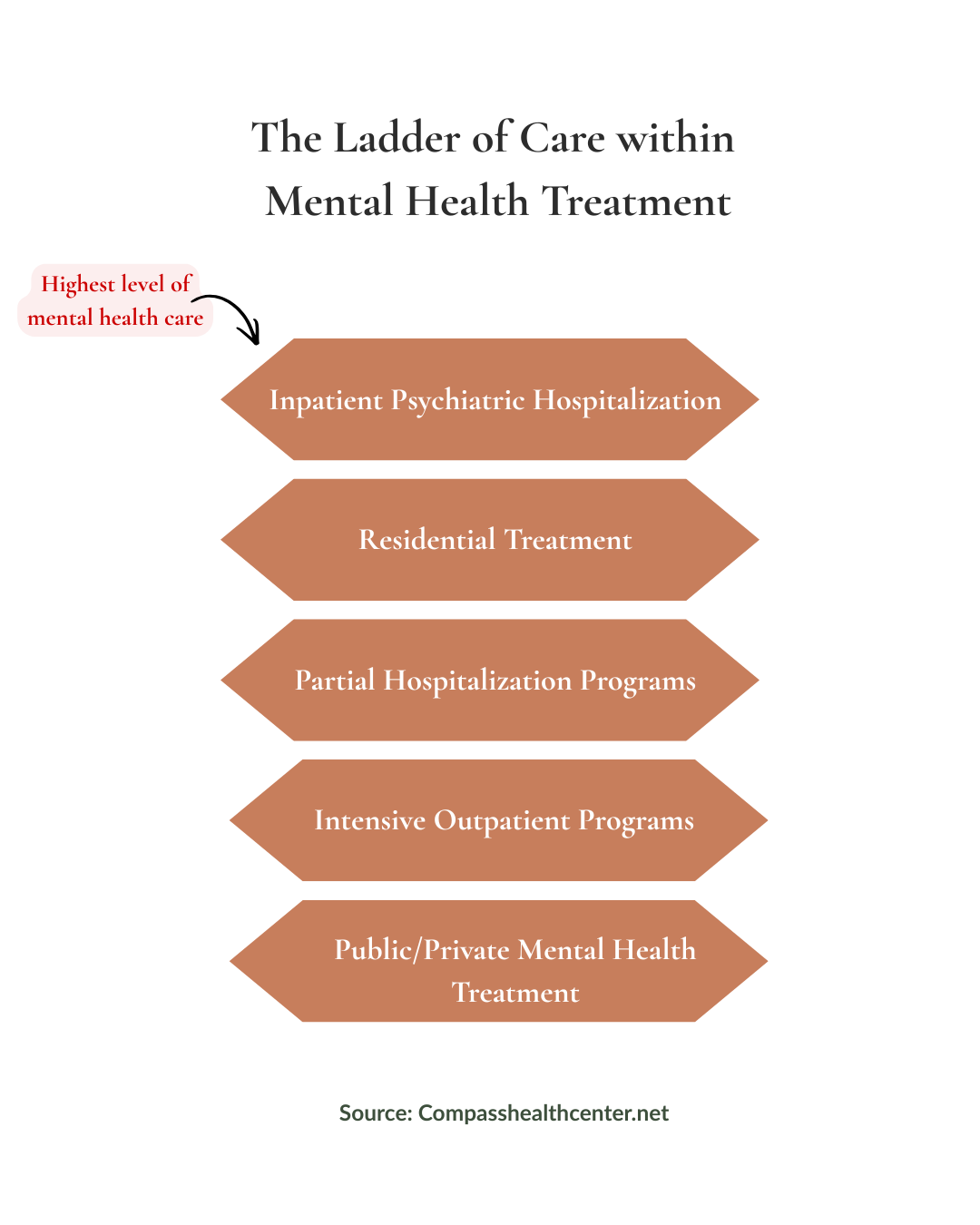
This chart illustrates the ladder of mental health care. It’s based on severity and safety concerns, with inpatient hospitalization being the highest form of care for acute needs like episodes of psychosis or mania, feelings of suicide/self-harm, or harm to others.
Next would be the partial/outpatient level of care, where you may not need full hospitalization but may need more support than a weekly therapy session or support in addition to weekly sessions. These types of programs can be general or specific to what you are struggling with, such as various forms of dependency, eating disorders, etc. The significant difference between the two programs at this level is that partial hospitalization is offered for daily treatment without an overnight stay and is still considered a higher level of care. While outpatient programs allow you to maintain most of your day-to-day responsibilities, they often require less time per week than partial hospitalization but more time than weekly sessions.
The next level of care is general care — not saying what you’re experiencing isn’t real or doesn’t need support, but the level of support you need may be manageable at this level of care. This level of support can come through connecting with care at a private practice or community mental health center. Community mental health is often free or very low-cost for access to mental health — sessions often last 30-45 minutes.
These tiers of support are based on the severity of your mental health, and the level you may need can change at any time based on your condition.
Searching for a Private Practice Therapist
Now, looking for a therapist in private practice, I would suggest the following directories:
**Please note that some directories on this list have come under scrutiny by mental health professionals for a myriad of reasons: internal business changes that resulted in the creation of an algorithm, negative associations with personal misconduct, etc. **
How to use Directories
Most directories have filters for:
gender,
specialties,
in-network with insurance,
therapy approach,
location, virtual/in-person/hybrid options,
and therapist preferences: ethnicity, gender/sexual identity, language, and faith.
Some directories have larger networks of professionals, while smaller ones are more specialized, focusing on specific preferences. Smaller directories will also have fewer filter options.
It’s worth noting that the number of therapists who come up for you will depend on location, with some cities/states having more therapists than others. Cities that have a low number of therapists are called “mental health deserts,” and we’ll be discussing this more in the final video essay on the history of psychotherapy.
If you find yourself in a location with a smaller pool of therapists, you may need to be more open about who you choose to work with. I would recommend focusing on 1 or 2 preferences you feel are necessary to feel safe enough to build trust.
Using the information that you gathered
Using the information you gathered about what you’re holding and the preferences of therapists you’d like to work with, use it as a guide for the list of therapists you want to reach out to schedule a consultation.
Now, every therapist you choose to take the next step with most likely won’t have everything you are looking for, so this is where flexibility and prioritizing your non-negotiables come in, letting that guide your decision-making.
A quick note on how therapists present themselves online on these directories. We are given a small window to capture all that we do. What I’d advise as you’re taking in all their bios/videos and information is:
Can this person help me with what I need support with?
Is it specified in their information that they work with such themes?
Check the specialties, or sometimes they’ll share their specific expertise.
Do they mention what approaches inform their treatment of their specialties?
Do they share how they work as a therapist?
Do they take insurance, or is the out-of-pocket rate clear?
Most will link to their website, which can provide more information before if you decide to reach out.
Payment Methods
If you are going with the self-pay option, consider whether you may need a sliding scale. This occurs when we may not have health insurance at all, have health insurance that can often not be accepted by most mental health professionals, and/or are seeking financial accommodations that most therapists will offer.
Now, how each therapist determines their sliding scale varies; some may ask for financial documents, some offer charts demonstrating income-to-need ratios, and some just offer sliding scales upon request and don’t ask for income verification details. If you are going this route, please ensure you ask specific questions in your consultations to weigh your options as clearly as possible.
Once you’ve created your list, begin reaching out. Often, you’ll be able to send them a message; it can be brief. Using the information you’ve gathered, create a quick message once and use it for each therapist you reach out to. The message can be short and direct:
“Hello, I’m seeking support with (insert 1/2 main symptoms or areas you want to work on). This has been going on for (insert timeline). I’m interested in (telehealth/in-person or a combination), and I have (insurance/will be using the self-pay option; ask for a sliding scale here if needed).”
Alternative Resources for Finding a Therapist
In addition to using directories, other resources that can help your search for a therapist include asking those you have relationships with, who you feel are safe and healthy. Share your interest in starting therapy and ask if they have any leads for therapists.
Since 2020, access to mental health professionals has increased by enabling virtual therapy, making more multi-state-licensed clinicians accessible, especially in rural areas (those mental health deserts I mentioned earlier). I’d also recommend working with psychologists, as specific laws, called PSYPACT, allow them to practice more easily across state lines. More information on that can be found here; it’s a resource showing which states allow them to work across state lines.
Quick Check-in Before You Go
Did you notice how I didn’t mention any specific platforms that have been marketed to us via ADs, influencers, and celebrities? If you want to know why, you can read my blog post, "The Convenience Trap in the Mental Health Industry.”
This is how we take back our power. And this is how I’m going to help you do just that. By demystifying therapy, the process of finding a therapist, and the confidence to navigate your wellness journey.
